Water source & treatment
The 2025 annual report describes ozone disinfection, coagulation, flocculation, sedimentation and dual-media filtration, followed by chlorination. Treatment also includes pH adjustment, fluoride addition and corrosion-control adjustment. The report lists raw, treated and distribution testing separately and provides operational ranges and averages. ENWIN’s report directory is the official route to the annual system report. Published plant values are context for household planning; they are not direct measurements from every customer’s drinking-water faucet.
What this means for your home
Windsor homeowners considering filtration should begin with their preferred outcome and a check of the existing plumbing and equipment. For a taste concern, establish whether it is present at the incoming supply and at all cold-water taps. For scale concerns, measure hardness rather than importing a number from another municipality or a commercial list. Velora can assess the property and discuss targeted treatment, ongoing filter changes and the space available for a serviceable installation.
Profile scope
Municipal Windsor system at A.H. Weeks plant, including shared supply with Tecumseh and LaSalle; private wells excluded.
Sampling context
- Operational turbidity: 0.02–0.07 NTU. 2025 annual operational range; average 0.04 NTU, 365 results, as reported by WUC. Source report
- Operational chlorine: 1.47–1.73 mg/L. 2025 annual operational range; average 1.56 mg/L, 365 results; not a household sample. Source report
- Fluoride, distribution: 0.43–1.21 mg/L. 2025 distribution range; average 0.63 mg/L. Source report
Official sources
- Windsor Utilities Commission 2025 annual system report (2025)
- ENWIN official drinking water report directory
Photograph credit
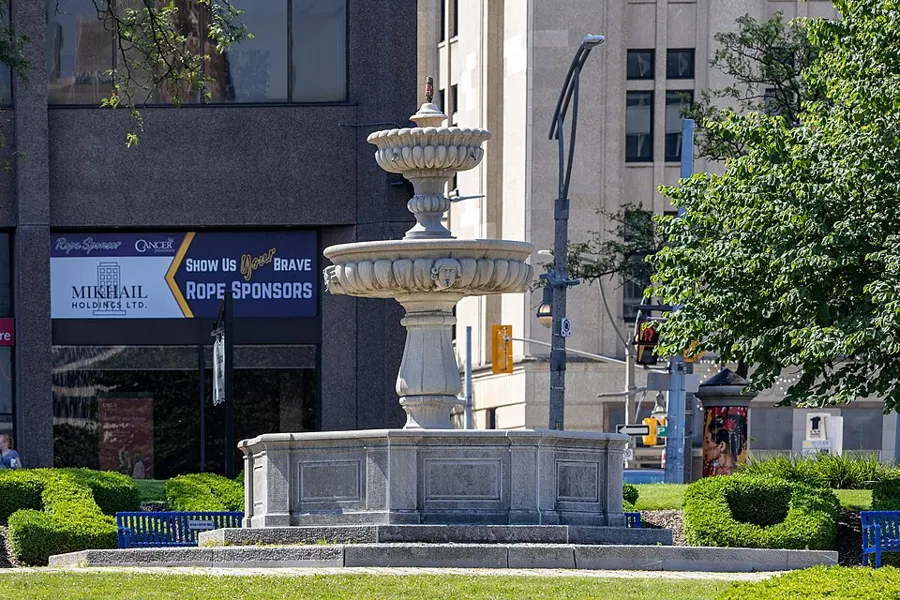
Fountain beside the Windsor riverfront, Ontario. Chris Woodrich · Wikimedia Commons. CC BY-SA 4.0. Resized and converted to WebP; may be displayed cropped.