
Water source & treatment
The Region explains that much of its supply comes from groundwater wells, where naturally occurring minerals contribute to hardness. Grand River water also forms part of the regional supply. Waterloo’s municipal distribution system relies on the Region’s pumping and treatment facilities and does not perform additional treatment itself. Its 2025 report records distribution testing, including free and total chlorine. Those are different measurements and should remain separately labelled in any comparison.
What this means for your home
Hardness and efficient softener operation are useful starting points in Waterloo. Confirm the incoming hardness for your address before setting regeneration or salt use. The Region recommends correct settings and checking for leaks or unnecessarily frequent regeneration. Velora can assess an existing softener, its bypass arrangement and the household’s demand alongside a new installation. Treat a drinking-water taste preference separately from scale management, and discuss which parts of the home actually need softened water.
Profile scope
City of Waterloo municipal distribution network; regional sources are blended and household supply should be confirmed by address.
Sampling context
- Total chlorine, distribution: 0.15–1.87 mg/L. 2025 City of Waterloo range from 3,722 grab samples. Source report
- Free chlorine, distribution: 0–1.21 mg/L. 2025 City of Waterloo range from 3,722 grab samples; distinct from total chlorine. Source report
Official sources
- Regional municipal drinking water supply
- Regional hard-water treatment guidance
- City of Waterloo 2025 drinking water annual and summary report (2025)
Photograph credit
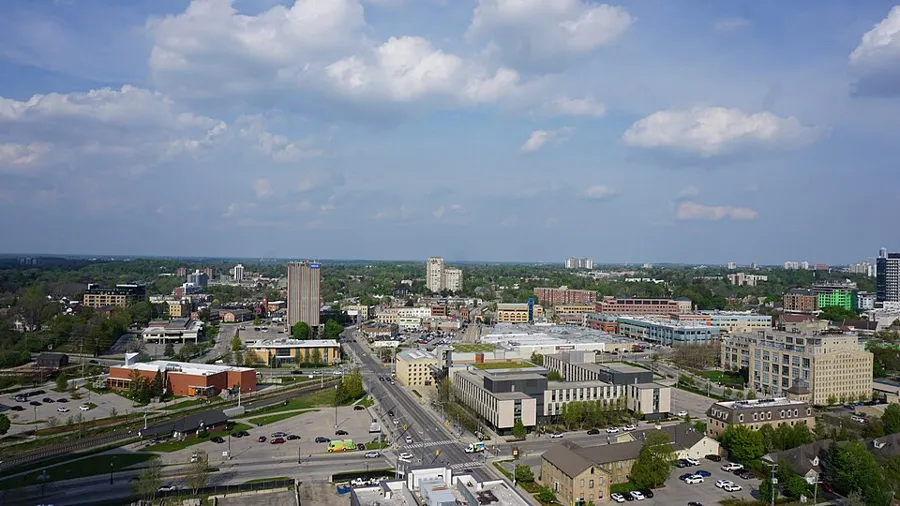
Aerial view of Uptown Waterloo, Ontario. JFVoll · Wikimedia Commons. CC BY-SA 3.0. Resized and converted to WebP; may be displayed cropped.