
Water source & treatment
LAWSS reports an intake in the St. Clair River and chemically assisted filtration with disinfection. Its process includes screens, coagulation, flocculation, dual-media filtration and chlorine-based disinfection, with powdered activated carbon used when needed for taste and odour. The City’s distribution report states that no additional treatment chemicals are added to the supplied water. Keep plant results and City distribution results separate, and consult current utility notices for operational changes since the report year.
What this means for your home
For a Sarnia home, identify whether the concern is taste, deposits, staining or an existing system needing service. The City’s published distribution chlorine range provides context, but it does not say what remains at your own tap after household plumbing or filters. Velora can assess incoming water and current equipment before proposing a change. For a new or sudden supply issue, check City or LAWSS guidance as well as the household installation.
Profile scope
City of Sarnia municipal distribution network supplied by LAWSS; excludes untested private water supplies.
Sampling context
- Chlorine, distribution: 0.58–2.12 mg/L. 2025 City of Sarnia range from 1,939 grab samples; report labels parameter Chlorine. Source report
- E. coli, distribution: 0–0 CFU/100 mL. 2025 City of Sarnia range across 1,034 distribution samples. Source report
Official sources
- City of Sarnia 2025 distribution system annual report (2025)
- LAWSS 2025 annual water report, Section 11 (2025)
Photograph credit
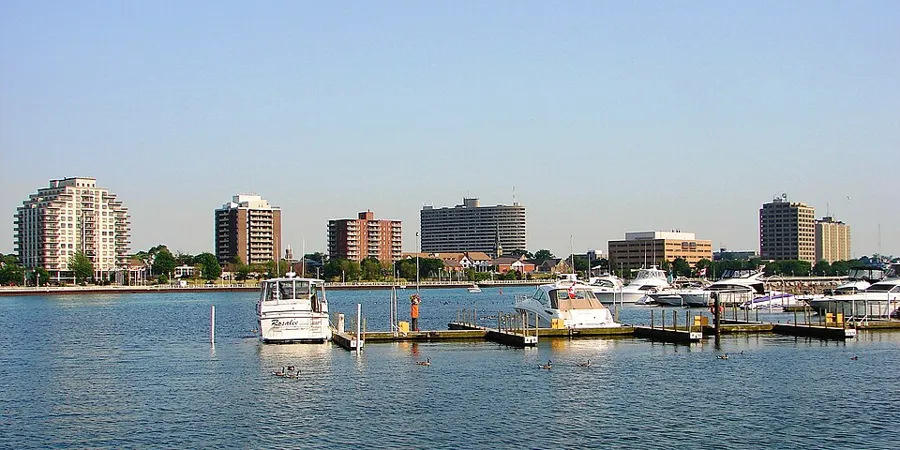
Sarnia skyline and waterfront, Ontario. P199 · Wikimedia Commons. CC BY-SA 3.0. Resized and converted to WebP; may be displayed cropped.