
Water source & treatment
The municipal plant treats Scugog River water using coagulation, filtration, chlorine disinfection and pH adjustment. The City's linked annual report covers 2024 and records distribution-system trihalomethane and haloacetic-acid running-average incidents. Those are historical system measurements, not a current result for your kitchen tap. The complete report and the City's current water notices provide the necessary context; this profile does not declare present-day compliance for an individual property.
What this means for your home
Start with the local report and a sample at the home. If the concern is taste, staining or visible particles, identify whether it involves the supply, distribution work or household plumbing before specifying a filter. The City documented temporary discolouration after a July 2025 mechanical issue and directed affected residents to municipal staff. For a private well, use property-specific laboratory results rather than Lindsay municipal averages.
Profile scope
Lindsay municipal system, which also serves Oakwood; other Kawartha Lakes systems and private wells require separate assessment.
Sampling context
- Trihalomethanes: 113.25 µg/L. Lindsay distribution running annual average recorded October 22, 2024 in the report's adverse-water-quality incidents; historical, not a current home sample. Source report
- Haloacetic acids: 88.85 µg/L. Lindsay distribution running annual average recorded October 22, 2024 in the report's adverse-water-quality incidents; historical, not a current home sample. Source report
Official sources
- City of Kawartha Lakes — Lindsay Annual Drinking Water Report (2024)
- City of Kawartha Lakes — Source Water
- City of Kawartha Lakes — Lindsay Drinking Water System update, July 11, 2025 (2025)
Photograph credit
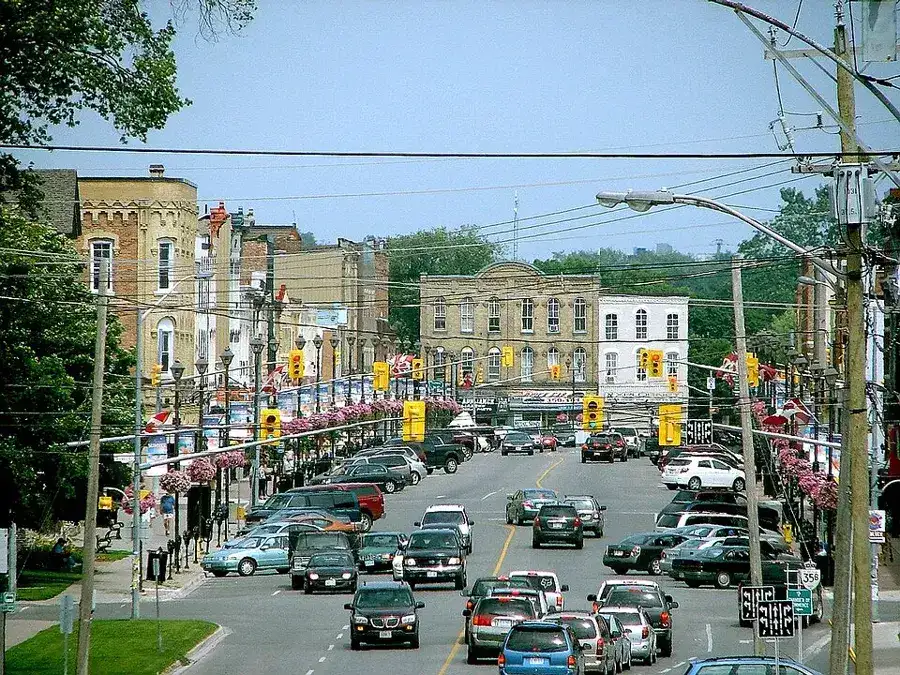
Downtown Lindsay in the City of Kawartha Lakes, Ontario. P199 · Wikimedia Commons. CC BY-SA 3.0. Resized and converted to WebP; may be displayed cropped.